

Landing your dream job isn’t just luck—it’s about understanding what recruiters want and showing them you’re the right fit. Studies show that 70% of job seekers struggle to get past the initial screening stage, but with the right strategies, you can stand out from the competition and accelerate your hiring process. Whether you’re entering the job market for the first time or making a career change, mastering the hiring process tips will give you a significant advantage. This guide breaks down everything you need to know to succeed at every stage of recruitment, from crafting your application to nailing the final interview. Understanding the Recruitment Process Before you can excel in hiring, you need to understand how the recruitment process works. The hiring process typically involves several stages: job posting and sourcing, initial screening, phone interviews, technical assessments, in-person interviews, and final offer negotiation. Recruiters use specific criteria at each stage to evaluate candidates. By understanding what they’re looking for, you can tailor your approach and present yourself more effectively. Most hiring managers spend only six seconds reviewing your resume, so making those seconds count is crucial. Modern recruitment has evolved significantly. Traditional job boards are no longer the only way to find opportunities. Today’s recruitment strategies include social media sourcing, networking, talent mapping, and direct outreach through platforms like LinkedIn and specialized job boards. Crafting a Strong Application That Gets Noticed Your application is your first impression, and it needs to demonstrate that you understand the job and bring relevant skills. One of the most important job interview tips starts before the interview—it’s about getting noticed in the first place. Start by tailoring your resume for each position. Generic resumes get filtered out quickly. Instead, review the job description carefully and incorporate relevant keywords and skills. Recruiters and applicant tracking systems (ATS) scan for specific terms, so matching the language in the job posting significantly increases your chances of getting selected. Your cover letter is equally important. Rather than generic statements, focus on specific achievements and why you’re genuinely interested in the role. Explain how your background aligns with the company’s needs and values. This personalized approach shows recruiters you’ve done your homework and are seriously interested in the position. When submitting applications through JustCruit’s job search platform, ensure all information is accurate and professional. Spelling mistakes and grammatical errors can immediately disqualify you. Take time to proofread everything before hitting submit. Mastering Phone Interviews and Initial Screening Phone interviews are often your first real interaction with a recruiter, making this stage critical for the hiring process. These conversations typically last 15-30 minutes and serve as a preliminary screening tool. Preparation is key. Research the company thoroughly—understand their mission, recent news, products, and culture. Visit their website, read company reviews on Glassdoor, and follow them on social media. This knowledge allows you to ask intelligent questions and demonstrate genuine interest. During the call, speak clearly and confidently. Find a quiet location without distractions. Have your resume, notes, and a list of questions ready. Listen carefully to what the recruiter is asking and provide concise, relevant answers. Avoid filler words like “um” and “uh,” and don’t interrupt the interviewer. One crucial job interview tip for phone screening: always follow up with a thank-you email within 24 hours. Reference specific points from the conversation and reiterate your interest in the role. This simple action sets you apart and keeps you top-of-mind. Acing Technical Assessments and Skills Testing Many companies now include technical assessments or skills testing in their recruitment strategy. These evaluations ensure candidates have the required competencies for the role. Whether it’s coding tests, writing samples, data analysis, or industry-specific assessments, preparation matters. If you know an assessment is coming, request details about what it will cover. Practice similar tests online—many companies use platforms like HackerRank, CodeSignal, or industry-specific tools. Time management is crucial during these assessments, so practice working under pressure. Don’t panic if you struggle with certain sections. Most assessments are designed to identify capable candidates, not trip you up. Focus on demonstrating your problem-solving approach and core competencies. After the assessment, you may get feedback or be asked to discuss your approach during an interview. Interview Preparation: Research, Practice, and Confidence In-person or video interviews are where your communication skills and personality shine. This is where you transition from screening to serious consideration. Proper interview preparation separates successful candidates from those who fall short. Research the company extensively. Understand their business model, recent achievements, challenges they might be facing, and their company culture. Knowing this information allows you to ask thoughtful questions and demonstrate genuine interest. Visit their careers page and check sites like Glassdoor for employee reviews to understand the work environment. Practice common interview questions with the STAR method (Situation, Task, Action, Result). Prepare specific examples from your experience that demonstrate relevant skills. For behavioral questions like “Tell me about a time you overcame a challenge,” have concrete stories ready. Mock interviews are invaluable. Practice with friends, family, or professional career coaches who can provide feedback. Record yourself answering questions and review the footage. Pay attention to body language, eye contact, and speaking pace. Key Behavioral Questions and How to Answer Them Recruiters use behavioral questions because past behavior predicts future performance. Questions like “Tell me about your greatest weakness” or “Describe a conflict you resolved” are designed to assess your problem-solving approach and interpersonal skills. For weaknesses, choose something real but not critical to the role, and explain how you’ve worked to improve it. For conflict resolution, focus on collaborative solutions and what you learned. Always connect your stories back to the job requirements and company values. Prepare at least 10 different examples from your work and personal life that showcase different competencies. These stories should illustrate teamwork, leadership, problem-solving, resilience, and innovation. The more prepared you are, the more confident you’ll appear. Handling Technical and Role-Specific Questions Technical interviews test your domain knowledge and problem-solving abilities. Whether you’re interviewing for a tech
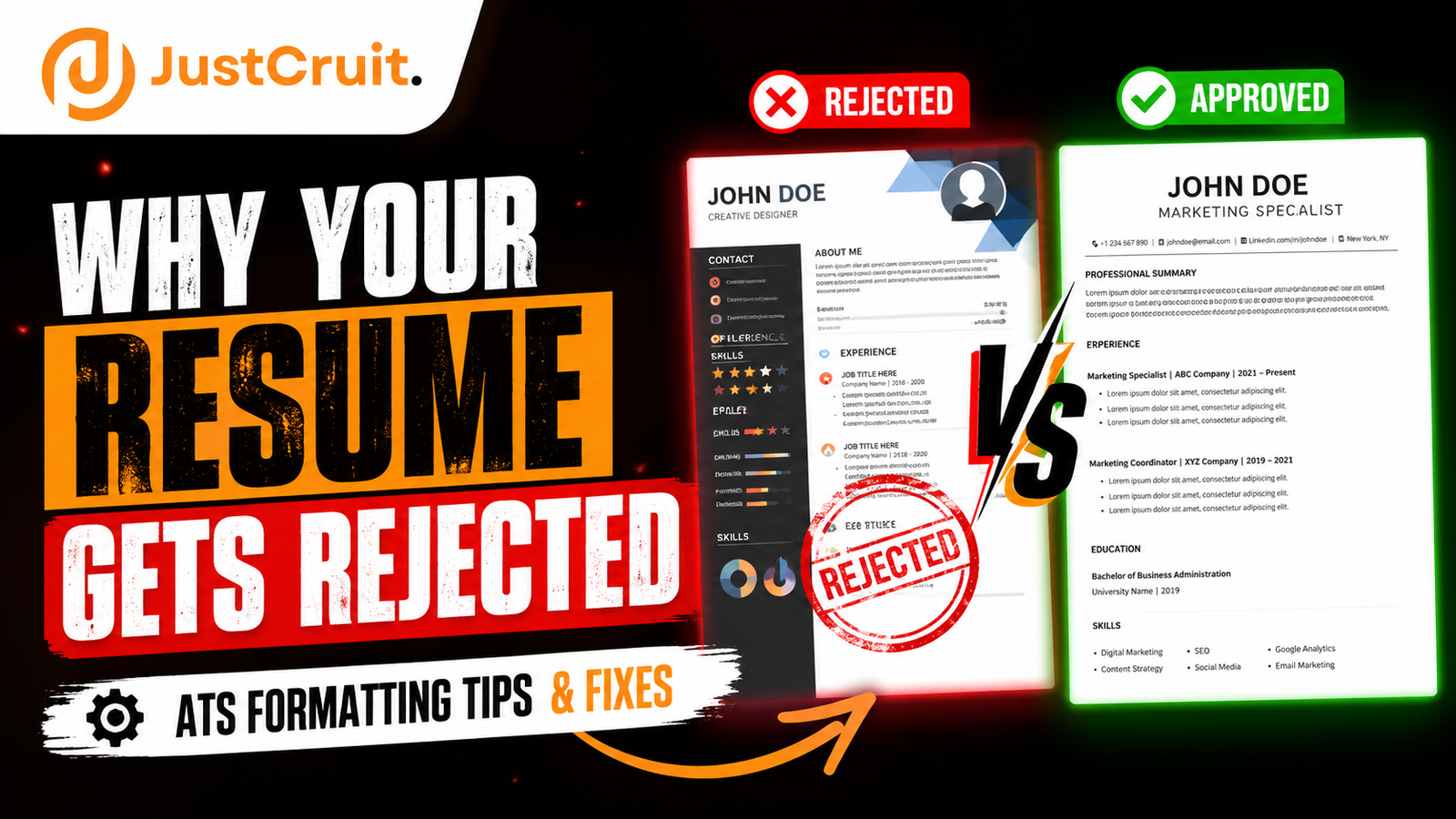
Why Your Resume Gets Rejected: ATS Formatting Tips & Fixes
You’ve applied to dozens of jobs. You’re qualified. Your experience matches the requirements. But you never hear back. Your resume is getting rejected—and the frustrating part is, it might not even be reaching a human recruiter. Every second, recruiters reject resumes without reading them. Not because you’re not qualified, but because your resume fails to pass the first filter: an Applicant Tracking System (ATS). Understanding why your resume gets rejected is the crucial first step toward fixing the problem and finally landing interviews. If you’re wondering why resume rejection is happening despite your qualifications, this guide reveals the exact reasons—and how to fix each one. The ATS Gauntlet: Why 75% of Resumes Never Reach a Human The biggest reason why resume gets rejected has nothing to do with your qualifications. Your resume might never reach a human hiring manager because it fails to pass an Applicant Tracking System (ATS). Over 75% of large companies use ATS software to scan resumes before any human eyes see them. These systems are designed to identify qualified candidates by searching for specific keywords, formatting patterns, and qualifications. If your resume doesn’t match what the ATS is programmed to find, it’s automatically rejected—no matter how perfect you are for the job. Here’s the problem: ATS systems treat resumes like databases, not like the polished documents you see. They scan for structure, keywords, and formatting. Resumes filled with graphics, tables, columns, or creative formatting completely confuse these systems. The software literally cannot read your resume properly, so it rejects it. Many job seekers don’t realize this. They spend hours crafting beautiful, visually impressive resumes using templates with fancy fonts, colors, and graphics. Then they’re shocked when they never get callbacks. The resume that looks amazing to a human looks like gibberish to an algorithm. The fix starts with understanding ATS requirements: save your resume as a clean, simple PDF or Word document; use standard fonts like Arial, Calibri, or Times New Roman (11-12pt); avoid tables, columns, graphics, text boxes, and headers/footers; use simple bullet points with dashes or asterisks; and submit your resume in the format the application specifies. When you explore job opportunities on JustCruit, the platform guides you on proper resume formatting. More importantly, JustCruit’s recruitment team has deep experience with ATS systems and can help optimize your resume for algorithm success. Missing Keywords: Why ATS Can’t Find Your Skills Even if your resume makes it past the formatting gauntlet, it faces another filter: keyword matching. ATS systems search for specific skills and qualifications that the hiring manager identified as essential for the role. If the job posting says “proficient in JavaScript” and you never use that exact term on your resume (even if you know JavaScript), the system won’t flag you as a match. You could write “experienced with web development programming” which shows you know the skill, but if the specific keyword isn’t there, ATS overlooks you. This is why resume gets rejected even when you’re qualified. Your experience might be directly relevant, but because you used different terminology than the job posting, the ATS can’t make the connection. Recruiters now understand this problem better than ever. Professional recruiters at JustCruit specifically look for candidates with aligned keyword matching because they understand how both ATS systems and hiring managers evaluate candidates. The fix requires strategic keyword alignment: Read the job description and identify exact keywords and phrases used throughout. Create a “Skills” section near the top of your resume with 15-20 relevant keywords directly from the job posting. Use those same keywords naturally throughout your experience descriptions. Mirror the language the employer uses—if they say “account management,” use that phrase, not “client relationship management.” If you have experience with a skill but didn’t mention the exact keyword, add it. For example, if you managed social media campaigns but never wrote “social media management,” add that keyword to your skills section and description. The best practice is to customize your resume for each application. Your base resume remains consistent, but you adjust the skills section and reorder bullet points to emphasize experience most relevant to each specific job. This approach keeps you ATS-optimized while showing recruiters you’ve tailored your application. Weak Bullet Points: Lacking Quantifiable Impact Why does your resume get rejected even when it passes ATS screening? Because your accomplishments don’t stand out. Resumes filled with job duties instead of achievements get overlooked by human recruiters reviewing multiple applications daily. “Responsible for managing social media accounts” tells a hiring manager almost nothing. “Increased Instagram engagement by 340%, growing followers from 8K to 35K in 8 months” shows real, measurable impact that grabs attention immediately. Weak bullet points are generic and forgettable: “Improved customer satisfaction,” “Enhanced operational efficiency,” “Contributed to team success,” “Assisted with marketing initiatives.” These phrases are so common they blend together. Recruiters can’t distinguish you from other candidates when you use vague language. Strong bullet points are specific and quantified: “Increased customer satisfaction scores from 72% to 94% through implementation of new quality control procedures,” “Reduced operational costs by $250K annually by optimizing supply chain processes,” “Led team of 5 in developing marketing campaign that generated $1.2M in revenue.” The pattern is clear: numbers matter. Percentages, dollar amounts, timeframes, and scale make your accomplishments concrete and impressive. Here’s the fix: Replace every generic responsibility with a specific achievement that includes numbers. Use metrics like percentages, dollar amounts, number of people managed, projects completed, timelines, or improvement rates. Focus on business impact—what did your work result in? Did it save money, generate revenue, improve efficiency, or enhance quality? Instead of “Managed project development,” write “Led cross-functional team of 8 through $2M product development project, delivered 2 weeks ahead of schedule and 8% under budget.” When you work with JustCruit’s career coaching services, coaches help you translate your experience into achievement-focused bullet points that grab recruiter attention. Poor Formatting Kills Readability Even if your resume has great content and passes ATS screening, poor formatting can still cause rejection. When a resume